Back to Blog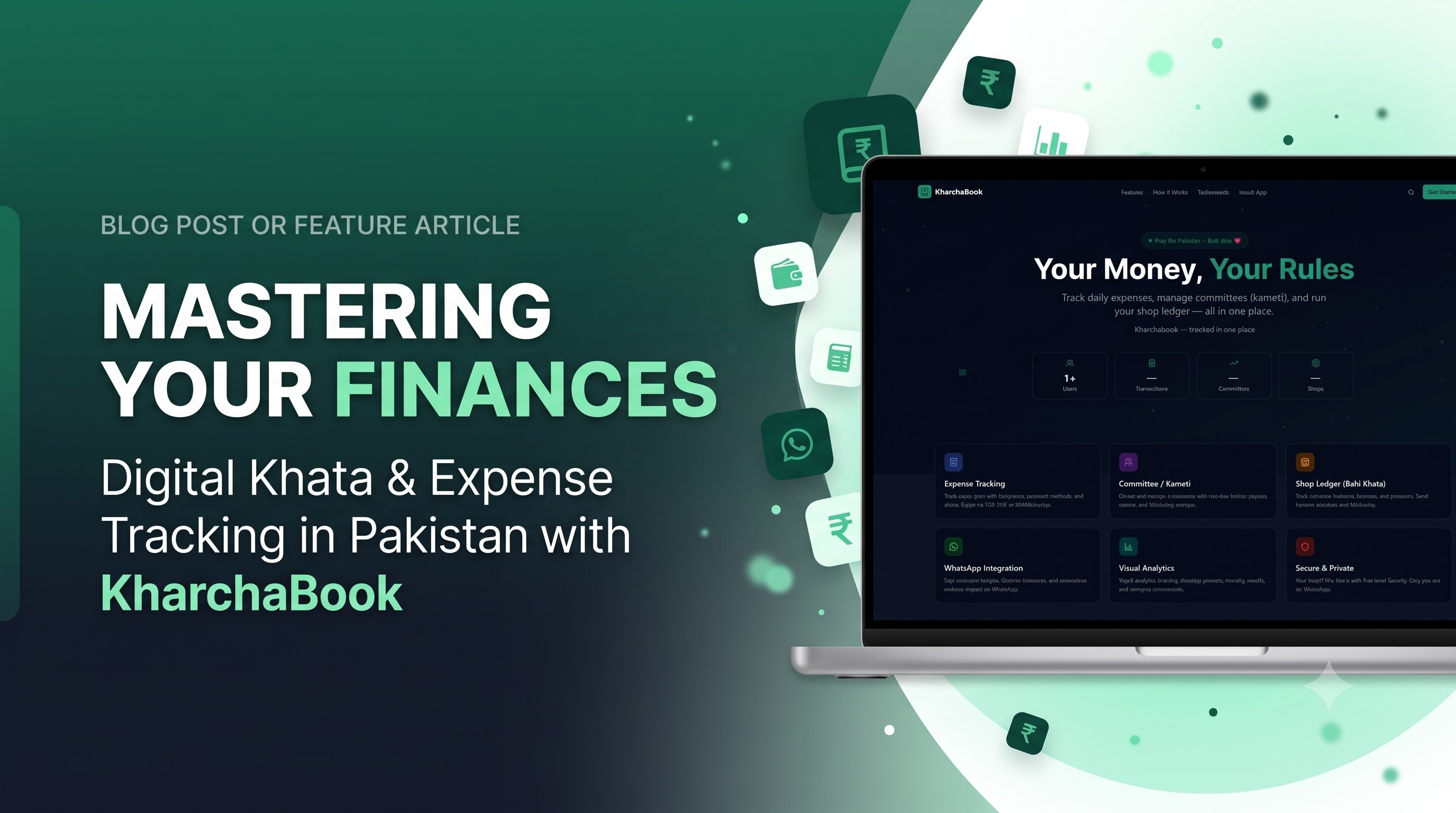
My BlogJuly 9, 2026· 3 min read
KharchaBook: Why Pakistan Needed Its Own Expense Tracker (Kameti, Khata & All)
#Fintech#Pakistan#PWA#Personal Finance#Product Design
Open any popular budgeting app and you'll find categories for subscriptions and credit cards — but nothing for kameti, the rotating savings committees millions of Pakistanis rely on, and nothing for the shop khata that runs every neighborhood store on trust and udhaar. KharchaBook exists because our financial culture deserves software built for it, not adapted to it. In this post I explain the three pillars of the app: daily kharcha tracking that takes seconds, a digital shop ledger that replaces the worn-out register, and kameti management with contributions and payout turns handled automatically. I also go into the product decisions that mattered most: shipping it as an installable PWA so it works like a native app without the Play Store, WhatsApp integration because that's where balances are actually shared, and an interface simple enough for a shopkeeper who has never used a finance app. If you're building products for Pakistan or any market that global apps overlook, the biggest lesson is here: local workflows aren't edge cases — they're the product.